
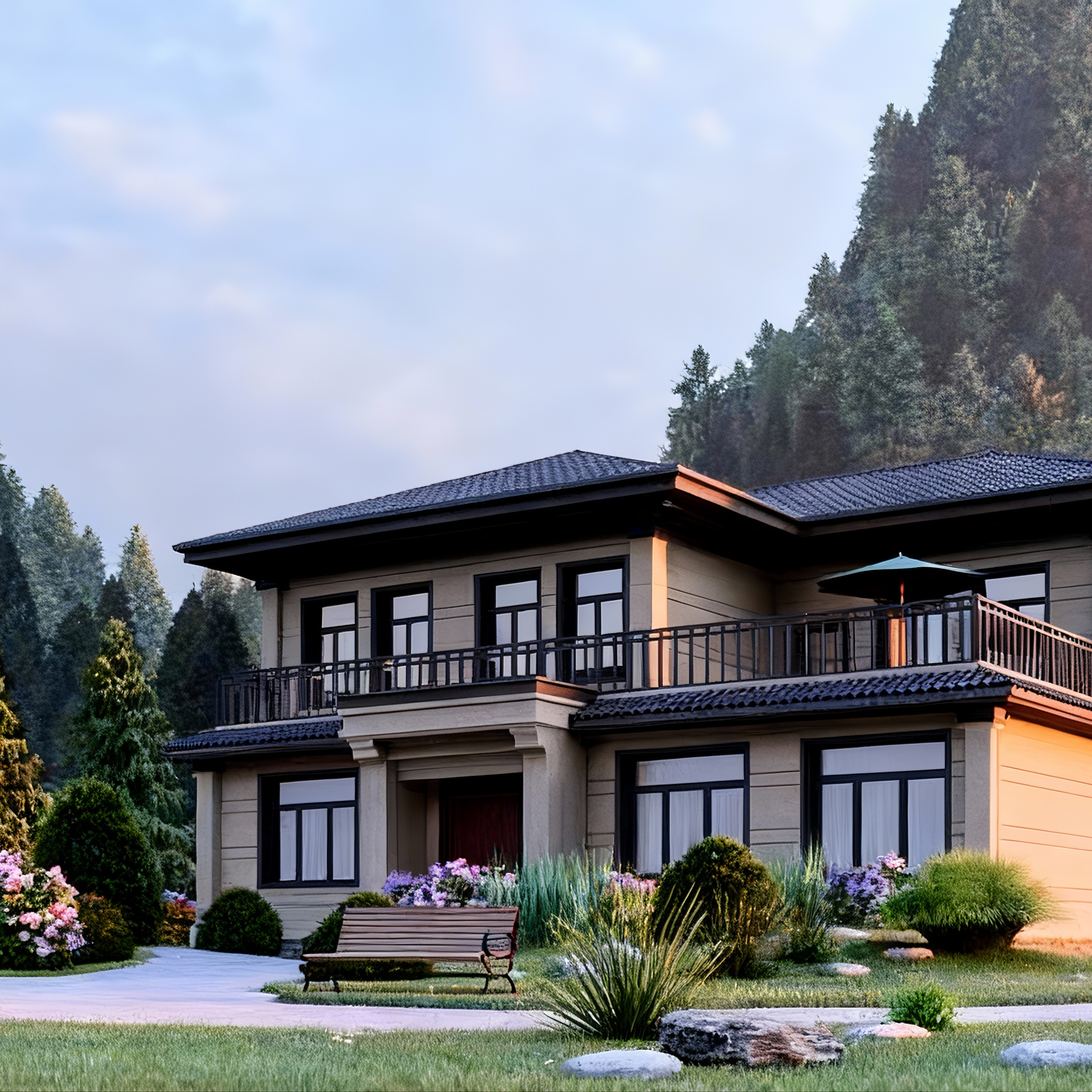
This case study highlights a prefabricated ultra-low energy courtyard residence that integrates time-honored Chinese courtyard layout aesthetics with advanced prefabrication technology and energy-saving solutions. By centralizing component production in factories and adopting passive-active energy strategies, the project cuts on-site construction time by 60%, reduces long-term energy consumption by over 75% (vs. conventional homes), and delivers comfortable, eco-friendly living spaces—ideal for rural revitalization, cultural tourism homestays, and wellness communities.
1. Project Background: Solving Dual Pain Points of Traditional & Modern Residential Construction
Conventional courtyard home construction faces two critical challenges: traditional on-site building methods are labor-intensive, time-consuming (often taking 6+ months), and prone to quality inconsistencies; meanwhile, modern energy-heavy residences fail to align with global low-carbon goals or preserve regional architectural charm. Many rural and cultural tourism projects struggle to balance traditional courtyard aesthetics (e.g., central yard layouts, local decorative details) with modern comfort and sustainability standards.
This prefabricated ultra-low energy courtyard residence was developed to address these gaps. Targeting scenarios like rural housing upgrades, scenic area homestays, and senior wellness communities, it combines prefabrication’s efficiency with ultra-low energy design—all while retaining the spatial and aesthetic charm of traditional courtyard homes.
2. Core Construction Model: Factory Prefabrication + On-Site Dry Assembly
The project’s efficiency stems from a centralized factory prefabrication system, which minimizes on-site work and ensures quality consistency:
2.1 Factory-Produced Integrated Components
All key structural and functional components are manufactured in professional factories under strict quality control protocols:
2.2 Streamlined On-Site Assembly
On-site work is limited to fast, dry-method component connection, completing the entire build in 3–5 weeks (from component delivery to move-in):
3. Ultra-Low Energy Performance: Passive + Active Design Strategies
The residence meets China’s ultra-low energy residential standards (≤50 kWh/(m²·a) annual energy consumption) through a combination of passive and active technologies:
3.1 Passive Energy-Saving Design
The project leverages natural resources to minimize energy reliance, paired with the traditional courtyard layout:
3.2 Active Energy Systems & Renewable Integration
To further reduce energy use, the project integrates efficient systems and clean energy:
4. Aesthetic & Functional Balance: Preserving Traditional Courtyard Charm
Unlike many modern prefabricated homes that sacrifice regional aesthetics for efficiency, this project retains the core appeal of traditional courtyard residences:
5. Project Outcomes & Application Scenarios
This solution has demonstrated measurable value across three key scenarios:
Key performance metrics include:
6. Conclusion: A Benchmark for Sustainable Courtyard Construction
This prefabricated ultra-low energy courtyard residence sets a new industry benchmark by merging traditional architectural heritage with modern prefabrication and low-carbon technologies. It solves the inefficiencies of traditional courtyard building while meeting global sustainability goals—proving that prefabricated homes can deliver both efficiency and cultural/aesthetic value. For projects targeting rural development, cultural tourism, or eco-friendly residences, this solution offers a scalable, high-performance alternative to conventional construction.
 EN
EN